

Case study: Website Redesign & Experience Design
Rethinking a complex B2B e-commerce experienceRF-Lambda develops and supplies RF test equipment for commercial, aerospace, and military applications. Its website needed a better way to support a large technical product catalog, help customers find relevant information, and make requesting quotes easier.
As Lead Experience Designer, I worked with company leadership on the direction of the website and e-commerce experience. I collaborated with a UX researcher, an associate UX designer, and a developer to rethink the site's structure, map key user flows, develop interaction concepts, and bring the proposed experience to life through functional prototypes.
My role covered the experience from information architecture and content strategy through visual and UI design, product discovery, and quote-request functionality. The project progressed to a working test site but was discontinued before public launch.
WANT THE SHORT VERSION?
Explore the final designs ↓
Visual direction and UI mockups
See it in action ↓
Live prototype and video walkthroughs
The Challenge
RF-Lambda's existing e-commerce platform had a dated interface and a complex product catalog. Customers needed clearer ways to navigate product categories, search for specific parts, review technical information, and connect with sales or technical support.
The challenge was to rethink both the structure of the site and the interactions within it, creating a more straightforward experience for customers exploring the catalog as well as repeat customers who already knew which products they needed.
Original Website

Research and Customer Insights
Stakeholder Insights
Collaborated with a UX designer to synthesize stakeholder feedback, identify recurring challenges, and inform the direction of the website redesign.

Customer insights
Working with the UX designer, we developed a shared understanding of RF-Lambda's key customer groups and their needs. The personas helped guide decisions around product discovery, navigation, and how different customers would use the catalog.

Customer Journeys
Journey mapping helped us understand how customers searched for, evaluated, and requested technical products, highlighting opportunities to improve product discovery, access to support, and the quote-request experience.


Shaping the Experience
The redesign involved more than updating the interface. I worked with company leadership and the UX team to rethink how information was organized across the site, what content customers needed, and how they would find it. This informed the information architecture, navigation, and new content sections, alongside the key flows for product discovery, support, and quote requests.
The proposed experience needed to work for different types of customers, from those exploring the catalog to repeat customers looking for specific parts. That meant supporting both guided product discovery and more direct ways to build a request for quote.
Feature Prioritization
Features were prioritized by balancing user impact with implementation complexity, informing a focused and realistic roadmap for future development.

Mapping Key User Flows
I mapped key user flows to explore how customers could move through the website, find relevant products, and complete tasks such as requesting a quote or contacting support. These flows helped establish the structure and interactions for the proposed experience.
Primary User Flow
Secondary User Flow

Visual Direction & UI Design
With the experience structure established, I explored the visual direction and developed the UI for the proposed website. The work moved from exploring different visual concepts to defining the interface style, refining key interactions, and applying the direction across the site.
Visual Direction Exploration
I explored different visual directions for the website, considering how typography, color, and layout could make a complex technical catalog easier to navigate while reflecting RF-Lambda's brand.
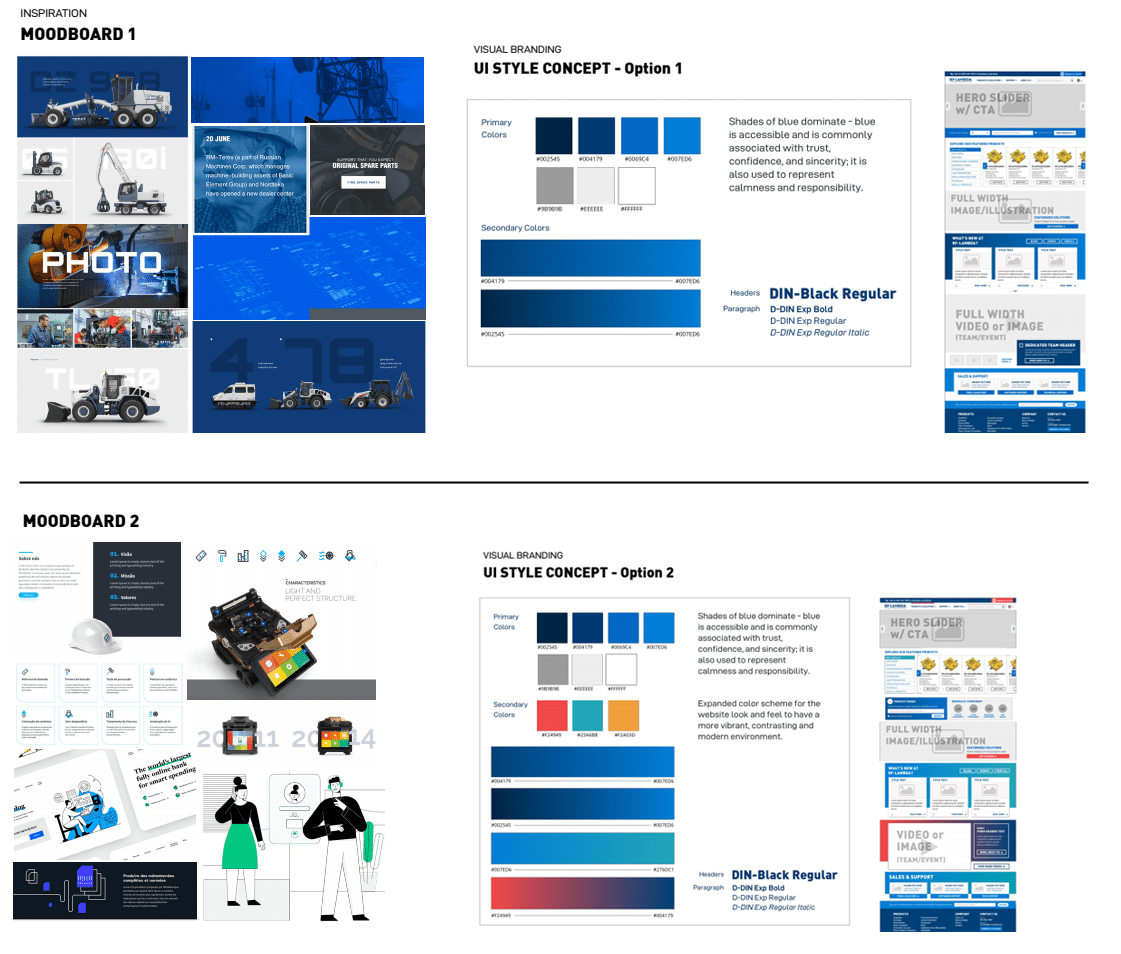
UI Style Guide
I developed a UI style guide to establish the visual language for the proposed website, defining the core styles and interface elements used across the experience.

Navigation and product discovery
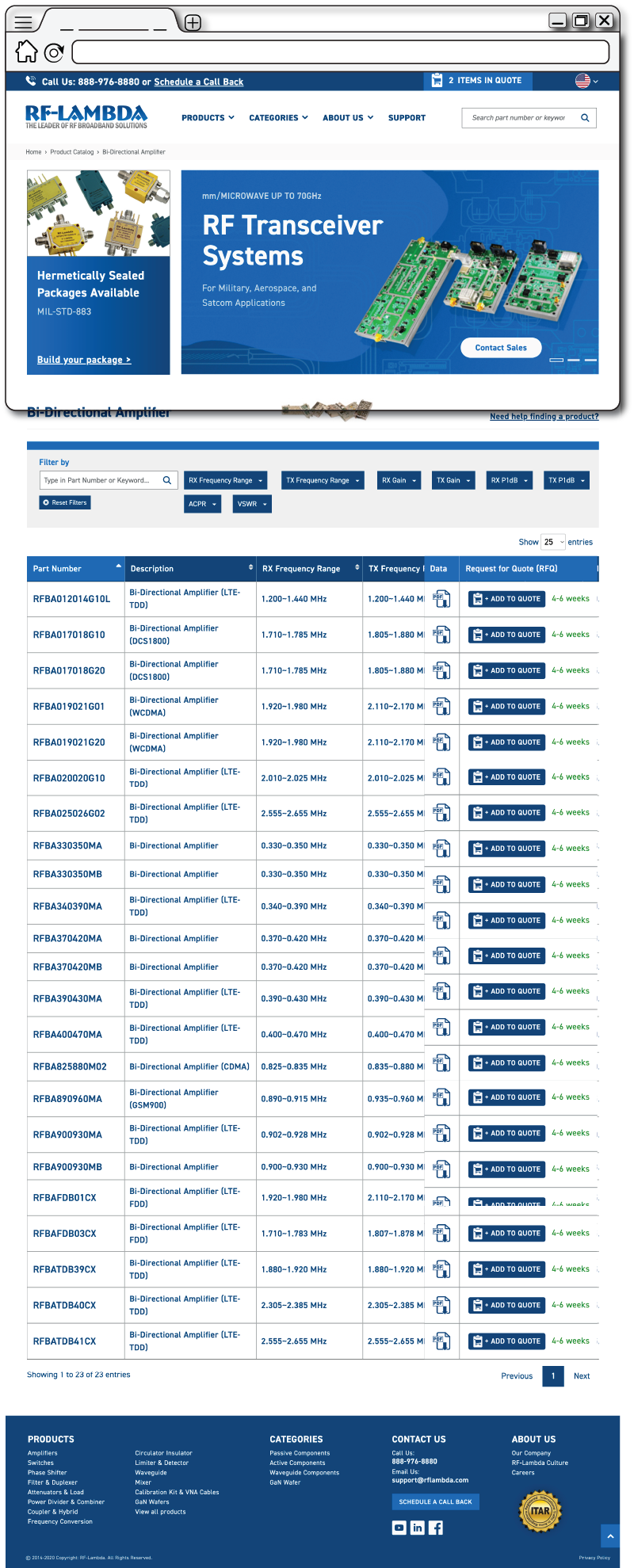
I applied the design direction to the navigation, search, product listings, and product detail pages, exploring how customers could find products and access technical information more easily.


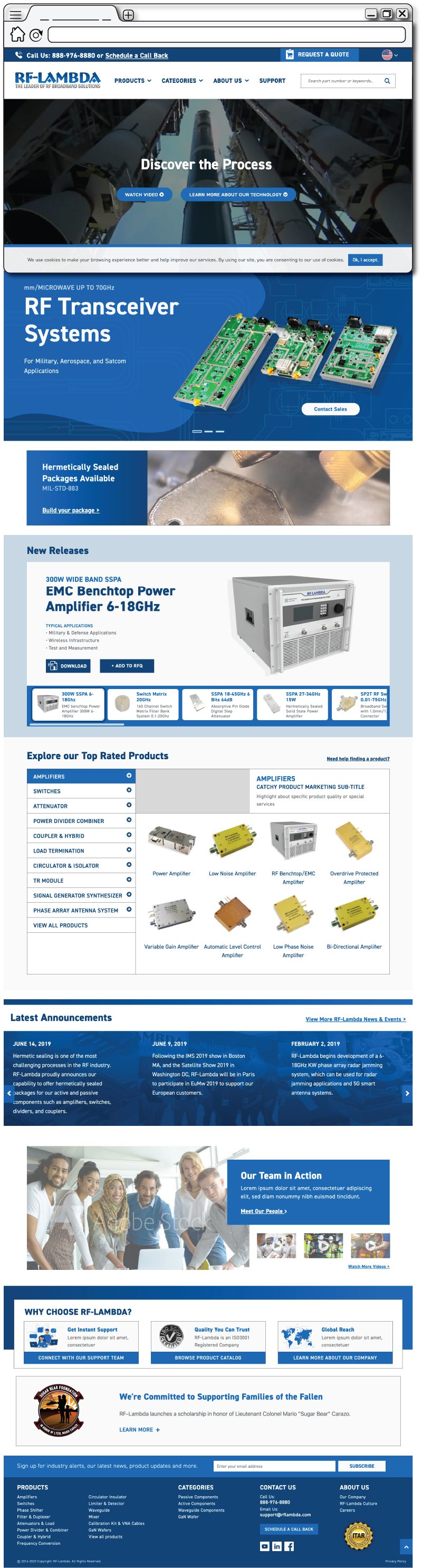
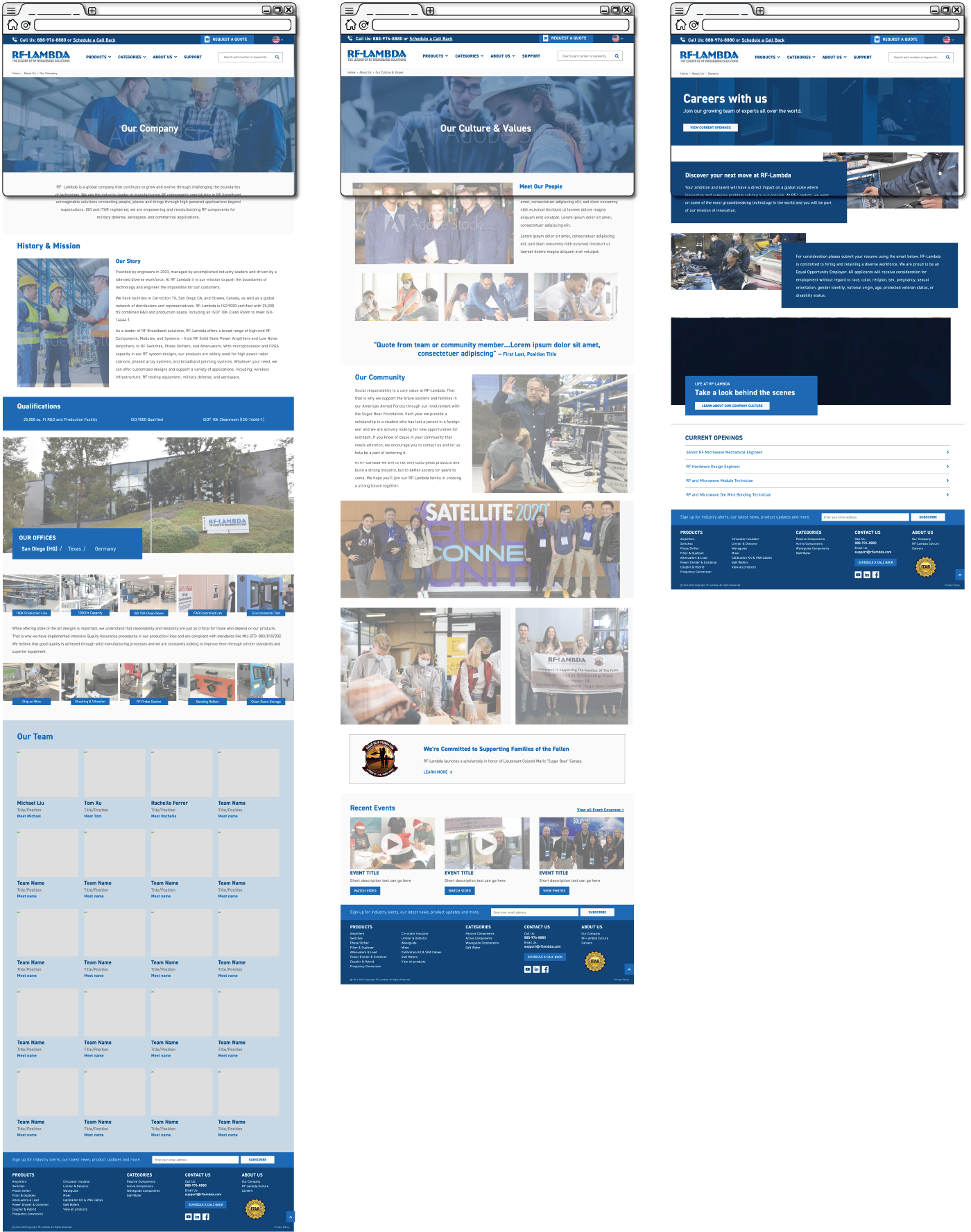
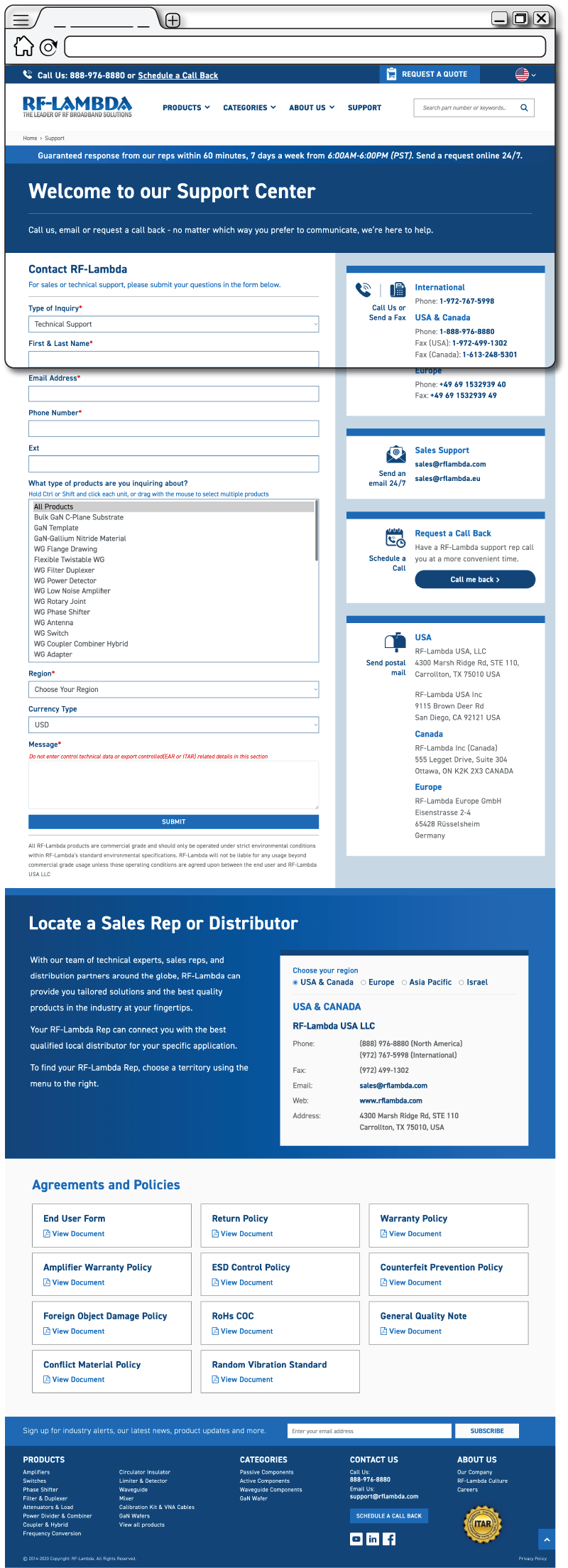
Final UI Design
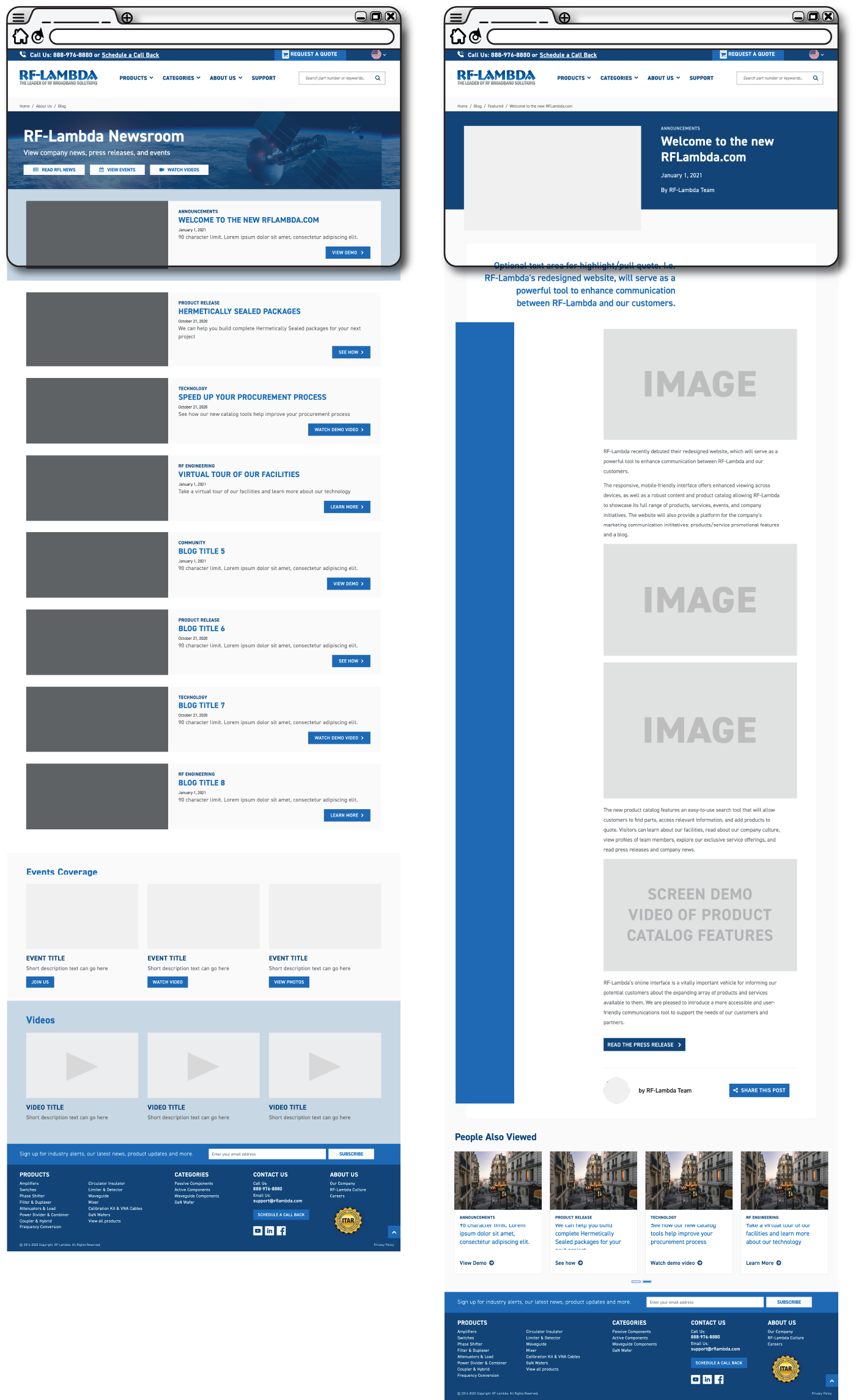
I applied the visual direction across the proposed website, including the product catalog, product detail pages, and new content sections. The designs brought the updated site structure into the interface while giving product information and key customer actions a clearer place within the experience.
The website in action
The proposed website brought together the updated information architecture, new content sections, product catalog, and quote-request functionality.
To help validate the more complex interactions with the site's database and content, I worked with the web developer to build a higher-fidelity, live test site. While development handled the back-end functionality, I implemented the front-end experience using HTML, CSS, and JavaScript.
Explore the proposed website and its functionality. View RF-Lambda prototype →
Website walkthrough
A walkthrough of the proposed website, including navigation, the product catalog, company information, and new content sections developed to better organize information for customers.
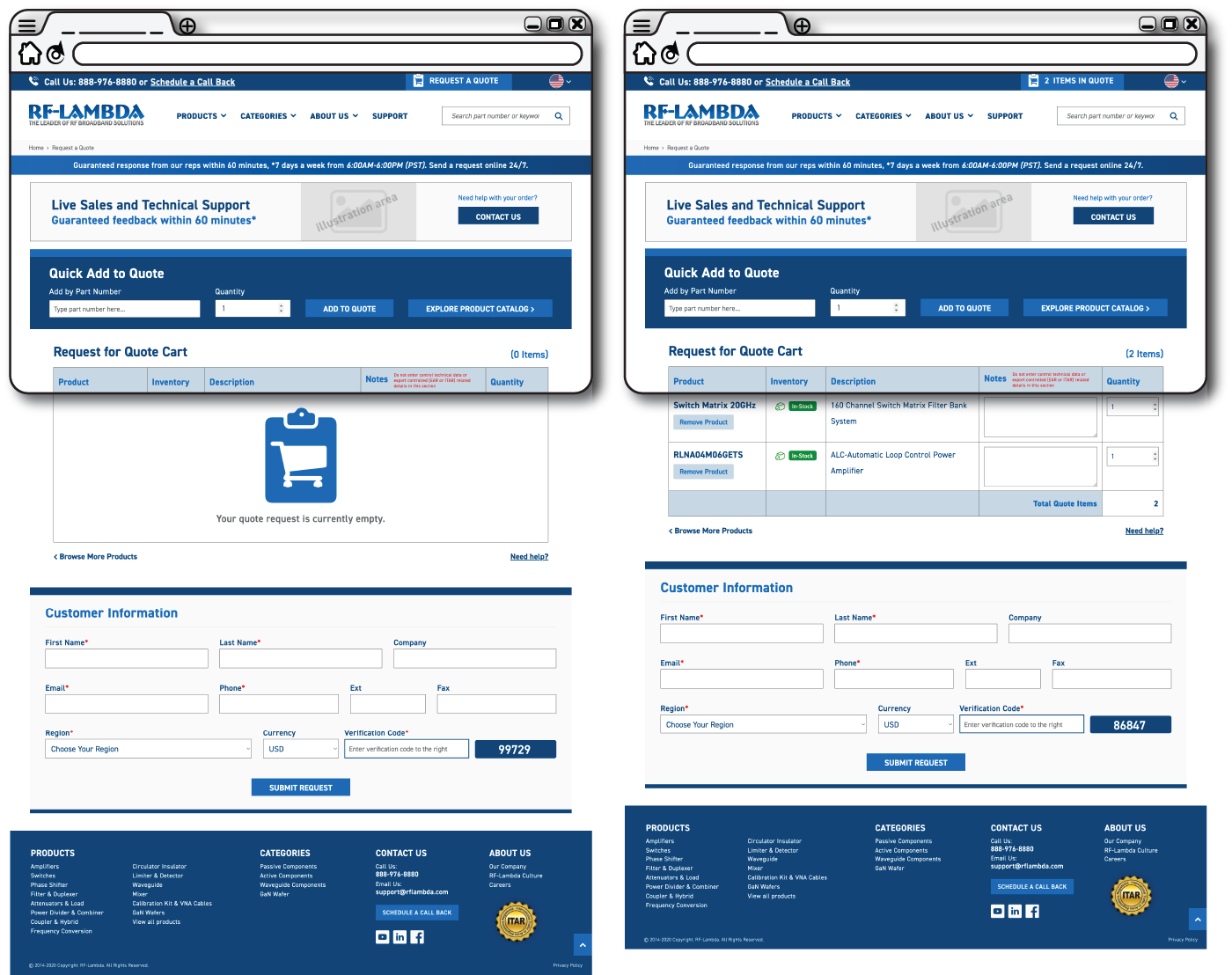
Request for quote (RFQ)
A closer look at the proposed quote-request experience, showing how customers could select products and build an RFQ.
Outcome
The redesigned website never launched publicly. RF-Lambda's existing e-commerce platform was built on a nearly decade-old legacy system with limited documentation, and the cost of rebuilding the underlying system ultimately proved too high. One of the company's owners decided to discontinue the Business Development team's efforts after considerable progress had already been made.
Although the project didn't reach launch, the team had developed a higher-fidelity, functional prototype that brought the proposed website structure, visual direction, product catalog, and quote-request experience to life.